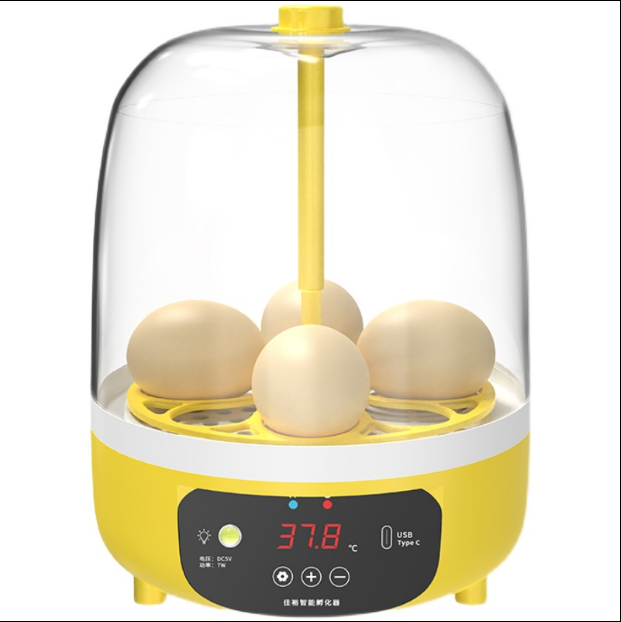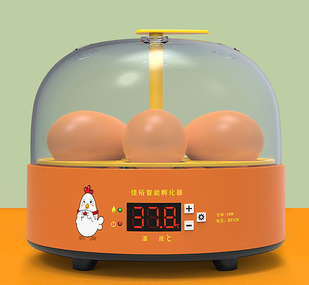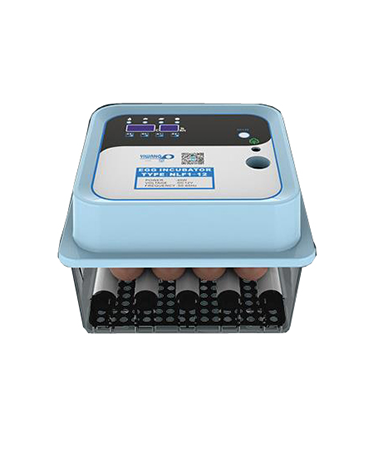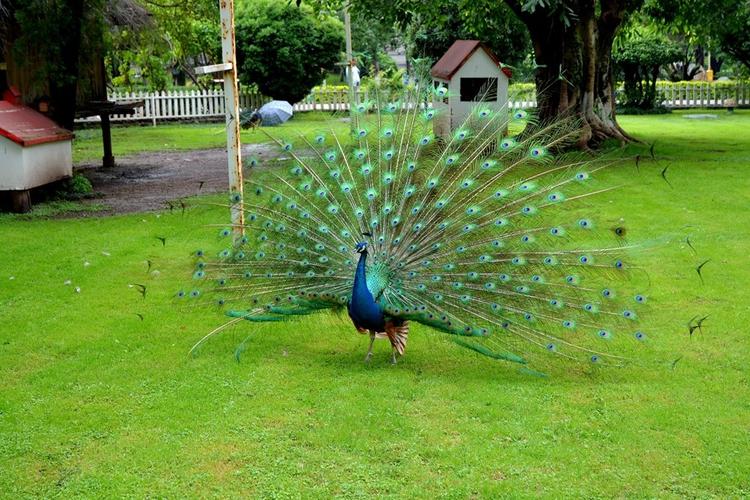
1. Egg selection: The peacock egg weighs about 120 grams, and the seed egg is generally stored for no more than 2 weeks. The egg shape is normal, the size is moderate, the egg shell thickness is uniform, the color is consistent, the color is bright, the shorter the time, the higher the hatching rate.
2. Disinfection: Before hatching, the seed eggs are generally disinfected by fumigation, that is, 15 grams of potassium permanganate and 30 ml of formalin are used per cubic meter, and fumigated at a temperature of 25~30 ℃ for 20 minutes, which can kill the virus on the seed eggs' skin. Disinfection is generally carried out in the disinfection cabinet.
3. Temperature: The incubation period of peacock is 26-27 days, and temperature is the primary condition for hatching. The incubation temperature should be high in the early stage, flat in the middle, slightly low in the late stage, and slightly high in the hatching stage according to the development of the embryo. The temperature is: the egg temperature is 36-38 ℃ for 6-8 hours before hatching, 38.5-38.8 ℃ for 1-8 days, 38.5-38.5 ℃ for 9-15 days, 37.8-38.2 ℃ for 16-21 days, and 37.5-38 ℃ for 22-26 days (i.e., hatching).
4. Humidity: Humidity also plays an important role in the whole incubation process. If the humidity is too low, it will cause the embryo to stick to the shell and it will be difficult to hatch; High humidity can easily lead to poor absorption of egg yolk, poor physique and death of young birds. The appropriate humidity should be controlled in the principle of high, middle and low between the two ends, that is, the relative humidity is 60% - 65% in the early stage, 55% - 60% in the middle stage and 65% - 70% in the later stage.
5. Egg turnover: In order to heat the seed eggs evenly and make the embryo develop normally, it is necessary to turn the eggs manually or naturally. From the second day of incubation, it is generally turned every 2 to 4 hours, and the angle of egg turnover is 90 degrees. Stop turning eggs on the 22nd day.
6. Egg drying: In order to prevent internal burning, the egg should be dried when the egg temperature reaches 38.8 ℃ in the middle and late stages of incubation. Generally, the egg should be dried once a day after 18 days of incubation. Air the eggs twice a day for 22~26 days. The time of air drying varies, and it can be flexibly controlled according to the situation.
7. Water spray: water spray is one of the key measures to improve the hatching rate. Water spray can make the egg shell crisp, the film on the peacock's egg shell thick, and the egg shell hard. Therefore, water spray once a day when incubating for 22 to 26 days, the water temperature is about 35 ℃, and continue to hatch after drying. Under the effect of repeatedly airing the eggs and spraying water, the egg shell changes from hard to brittle, which is conducive to the hatching.
8. Egg exposure: the first exposure is 6 to 8 days, mainly to check the fertilization of seed eggs. Normal eggs can see black eye spots. The color inside the egg is red and has blood. There is no change in the egg without sperm. The egg yolk is complete and the egg white is transparent. Take out the egg without sperm in time. The number of times of taking eggs should be operated according to the specific situation, mainly checking the development of embryos and finding out the dead eggs in time.