6. Temperature measurement of eyelid:
The eyelid is a sensitive part of the human body. It is simple and practical to check the egg temperature. The temperature of normal people is nearly 37 degrees. When the egg is placed on the eyelid, it feels mild at about 37 degrees, cool at about 37 degrees, hot at about 38 degrees, can tolerate scalding at about 39 degrees, can tolerate scalding at about 39 degrees, and can't tolerate scalding at more than 40 degrees. 7. Check the temperature of the tire
Fetal temperature: according to the development of the embryo, the temperature is applied to the fetus. If a single bead is seen in five days, the blood vessel accounts for four fifths of the egg surface, indicating that the temperature is normal. If a double bead is seen, indicating that the temperature is too high, it should be reduced by 0.5 degrees. If the eye spot is not seen, indicating that the temperature is too low, it should be increased by 0.5 degrees. Because of the inconsistent development of the embryo, there will be several shapes at the same time. At this time, the majority should prevail.
8. Perspective characteristics of chicken embryo development day by day and hatching management;
1st day, the organ primordium appeared, and there was a small transparent dot on the surface of the egg yolk, which was shaped like a fish eye.
2nd day later, the heart of the embryo began to form, and the blood began to circulate. The blood vessel area of the yolk sac was seen, which was shaped like cherry.
After 3rd days, the vascular area of the yolk sac was clearly seen, which was shaped like a mosquito. When the egg was turned, the "mosquito" followed up float.
4tg days later, the yolk vascular zone was close to the egg shell, and the shape was like a spider. When the egg was rotated, the "spider" did not rotate with it.
In 5th days, due to pigmentation, an eye spot can be seen.
On the 6th day, the embryo moved and the trunk was significantly enlarged, and two eyespots could be seen.
7th days later, the amniotic fluid increased, the embryo sank in the amniotic fluid, and half of the egg surface was covered with blood.
After 8th days, the embryo keeps floating from the front, and the yolk is not easy to shake when the egg rotates from the back.
On the 9th day, the neck bone began to ossify, and the head and tail of the embryo swung obviously. When the egg turned, the edge of the back blood vessel was easy to shake.
From 10th to 11th days, the allantoic blood vessels close at the small head.
From 12th to 16th days, the blood vessels gradually thickened and the color deepened. Due to the decrease of water, the air chamber became larger. With the development of the embryo, the shiny part decreased and the dark part increased.
On the 17th day, the embryo completely entered the amniotic sac, and the shiny part could not be seen.
On the 18th day, the embryo turned around and the beak began to turn to the air chamber, which was significantly enlarged and tilted to one side.
On the 19th day, the neck and wings protruded into the air chamber, most or all of the egg yolk entered the abdomen, the blood vessels atrophied, the dark shadow was seen shaking near the air chamber, and began to breathe with the lungs, and heard the yin call.
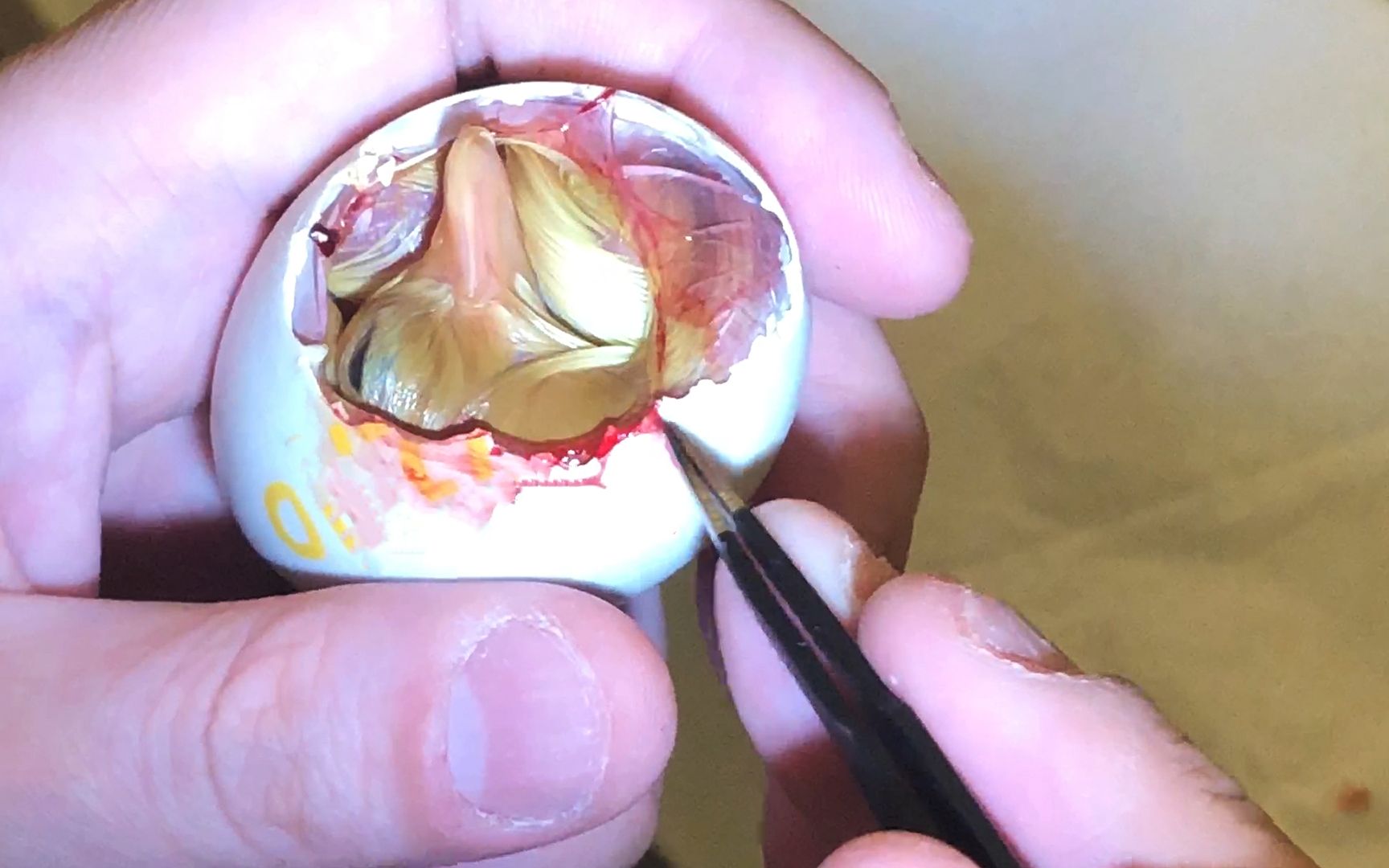
For 20 days th, you can hear the sound of pecking shells and crowing chickens.
21st days, chickens come out.