1 Check whether the incubation conditions are suitable
1.1 Temperature
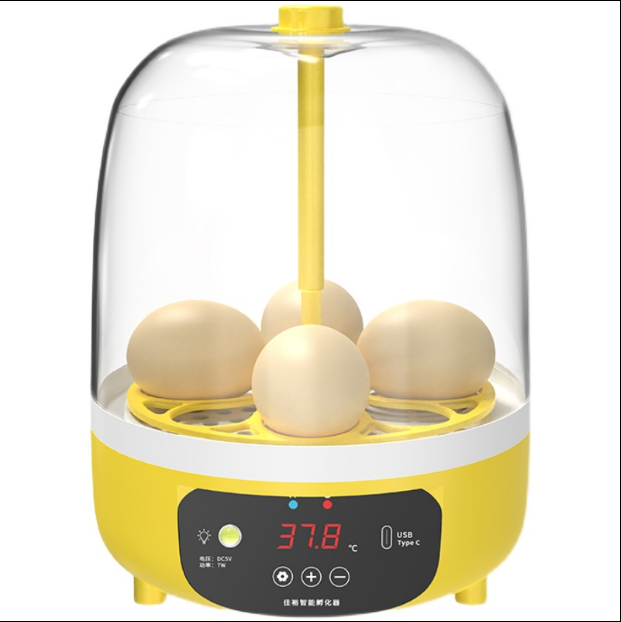
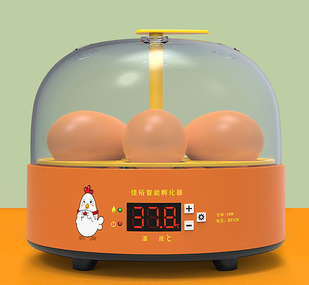
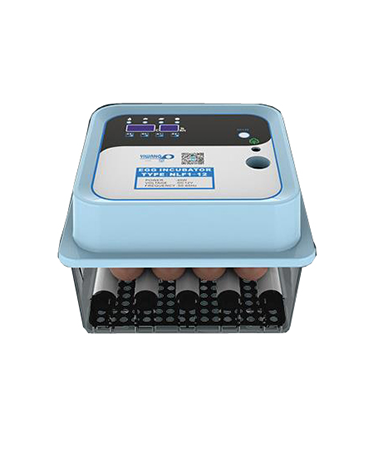
Temperature control is very important in the incubation conditions. There are two ways of duck egg incubation - constant temperature incubation and variable temperature incubation:
For incubation at constant temperature, the new and old eggs should be placed alternately. Generally, the temperature in the incubator should be controlled at 37.5 ℃, but the temperature difference between front and back, up and down, left and right in the incubator should not be too large, and should be controlled at ± 0.1 ℃~0.2 ℃. Otherwise, the incubation rate will decrease. This incubation method is a flow process method in which different batches are carried out at the same time. If temperature, humidity, ventilation and other conditions cannot be guaranteed, it should not be used.
Variable-temperature incubation is also called whole batch incubation, which is "all-in and all-out system". This incubation method is adopted when the source of seed eggs is insufficient. Because duck eggs are large and have high fat content, metabolic heat will be generated greatly after incubation to 13 days. If the temperature in the incubator is not adjusted, it will cause local overheating in the incubator and cause the death of embryo eggs. Temperature control is as follows
Table 1 Temperature control in variable temperature incubation
Temperature for incubation days (℃)
1 38.30
2 38.20
3 38.10~38.00
4~13 37.90~37.80
14~25 37.60~37.40
26~28 37.30~37.20
When adopting variable temperature incubation, the temperature difference in the machine should be reduced as much as possible. In addition, the temperature adjustment should be fast and accurate, especially in the first three days of incubation.
1.2 Humidity
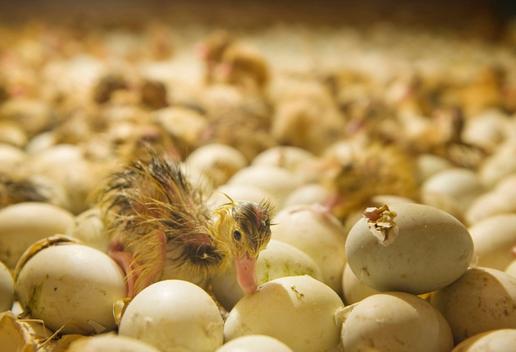
The relative humidity of incubation can be controlled at 40% - 70%, and the suitable range is 50% - 70%. 65%~75% is suitable for hatching to help the duckling peck and hatch, and prevent the duckling peck and fluff from sticking to the eggshell.
1.3 Ventilate, turn eggs, cool eggs, etc
The oxygen requirement of the embryo increases in a positive proportion with the increase of the embryo age. The air inlet and outlet should be adjusted according to the incubation season and the size of the embryo age to keep the air in the incubator fresh, and the ventilation should also ensure the appropriate temperature and humidity. The egg turnover is of great significance before and during the incubation period. It should be 8-12 times every day and night, with a minimum of 4 times. Do not turn the eggs at the later stage of hatching, especially the days before hatching. After incubation for 14 days, the eggs should be cooled, twice a day, for 20-30 minutes each time, but not more than 40 minutes. In summer, the outside temperature is high, so it is not feasible to use only ventilation to cool the eggs. You can spray water twice.
2 Check the condition of male and female breeding ducks
1.1 Check the body condition and pay attention to whether the male and female breeding ducks are healthy and aged. In particular, male ducks are generally eliminated after only one year of use. The egg production of female ducks is the highest in the first year of laying eggs, and the egg production in each year of laying eggs decreases year by year. Therefore, it is appropriate to use the female duck for 2-3 years.
1.2 Pay attention to the appropriate matching proportion of male and female ducks, which varies greatly with different breed types. Please refer to the groups in the table below and make appropriate adjustments according to the fertilization rate.
Table 2 Proportion of male and female ducks
Breed male duck: female duck
Egg duck 1 ∶ 20 ~ 25
Meat duck 1 ∶ 5 ~ 8
Large meat duck 1 ∶ 4 ~ 5
Dual-purpose duck 1 ∶ 15 ~ 20
1.3 Pay attention to prevent the feed and drinking water of breeding ducks from being polluted by pesticides, fertilizers, rodenticides, etc.
3 Check whether there is any disease infection factor
1.1 Ducks with Escherichia coli disease prefer to lie down and do not want to walk. When standing, they can see that the abdominal circumference is swollen and sagging, which is like a penguin. When palpating the abdomen, there is a sense of wave, and the puncture has ascites flowing out.
1.2 Ducks and adult ducks infected with chlamydia have no clinical symptoms, and hepatosplenomegaly and pneumocystitis can be seen after dissection.
1.3 Salmonellosis
1.3.1 Typhoid fever has no obvious appearance symptoms. Ovarian changes, egg yolk deformation, egg rupture, hemorrhage, deformation, dim color, peritonitis and catarrhal enteritis can be seen through dissection.
1.3.2 Paratyphoid fever generally does not have external symptoms. The liver, kidney and spleen are congested and swollen after dissection, and there are hemorrhagic and necrotizing enteritis.
1.3.3 Arizona disease is similar to paratyphoid fever, but the pathogen is different.
4 Check the quality of seed eggs
4.1 The quality of eggshell requires uniform calcium deposition and moderate thickness. Sand shell eggs and steel shell eggs are not suitable for hatching.
4.2 Eggs that are too large or too small should be removed. The weight should be 80~100g (60~70g for small ducks).
4.3 The hatching rate of irregular eggs is also not high. The egg shape index (egg length/egg diameter) is generally required to be 1.3~1.5.
4.4 The surface of clean eggs should be free of feces and other pollutants, otherwise the bacteria it carries will pollute other eggs and machines, and it is also easy to cause stillbirth and reduce the hatching rate.
If there is pollution, it should be cleaned and disinfected in time and carefully before incubation.
Preservation, transportation and freshness of five kinds of eggs
5.1 Seed eggs should be stored in a place that is not stimulated by high or low temperature. The suitable storage temperature is 18 ℃~20 ℃. It should not be stored above 23.9 ℃ or below 0.5 ℃.
5.2 The appropriate relative humidity for egg storage is 75% - 80%. Bacteria are easy to grow and breed at high humidity, and water at low humidity is easy to evaporate and lose, and the air chamber becomes larger, which affects the hatching rate.
5.3 During storage and transportation, it shall be protected from sunlight, rain, vibration, and contact with pesticides, fertilizers and other toxic and harmful substances.
5.4 The fresher the eggs, the higher the hatchability. The storage period of duck eggs shall not exceed 7 days in spring and autumn, 5 days in summer and 10 days in winter.
6. Nutritional factors
It is mainly due to vitamin A deficiency. In addition to the low hatching rate of eggs laid, the other symptoms are: low appetite, reduced food intake, limb weakness, unstable walking, swelling of upper and lower eyelids, blindness, etc.
In a word, only by comprehensively understanding from multiple perspectives and aspects can we find the key to solve the problem and reduce economic losses.